
Advancing De-escalation in Policing
Research-informed Strategies for Safer Outcomes
De-escalation in policing is a critical strategy for safely managing high-stress, potentially volatile interactions between law enforcement officers and the public. At the National Policing Institute (NPI), we are committed to strengthening how de-escalation is taught and applied, as well as building evidence on its impacts in the law enforcement profession. Through innovative research, model training programs, and national-level initiatives, NPI plays a leading role in shaping the future of de-escalation practices.
Our experts specialize in:
- Evaluating de-escalation training effectiveness
- Developing research-informed guidance and standards for de-escalation
- Creating real-world de-escalation training resources grounded in best practices
- Collaborating with officers, trainers, and public safety leaders
Our work brings together law enforcement professionals, mental and behavioral health experts, and academic researchers to deliver a comprehensive, interdisciplinary approach to crisis response. NPI's resources are designed to help officers build the skills and confidence needed to apply de-escalation techniques in the field.
As more agencies adopt de-escalation training as a cornerstone of modern policing, NPI continues to drive forward with evidence-based strategies, practitioner innovations, and accessible tools that support officer safety, community trust, and better outcomes for all.
Explore our growing library of de-escalation research, training materials, and practical tools.
Quick Links
Key Elements of De-escalation Training
De-escalation training should impart trainees with skills to enhance critical decision-making, communication, and tactics as well as build rapport and influence with individuals to move toward a resolution.
De-escalation tactics should help officers stabilize a situation and reduce the immediacy of harm; this may include pre-response planning, scene assessment, a team approach, and tactical repositioning to use distance and cover as an advantage.
De-escalation training helps officers recognize and respond to a person who may be experiencing a crisis due to factors such as situational stress, trauma, mental health conditions, substance use, and cognitive disabilities, among others
De-escalation training should impart officers with verbal and non-verbal communication skills to effectively engage members of the public through active listening.
Time is to be viewed as a resource during de-escalation training, allowing for more options and resources to be considered by officers.
De-escalation training reinforces that officers often have multiple response options when they arrive at a scene based on their police powers, agency policy, criminal activity (or lack thereof), and goals.
De-escalation training encourages officers to consider using community resources and services to divert individuals from the criminal justice system where appropriate.
De-Escalation FAQs
Given the wide variety of de-escalation training programs and delivery methods, it is imperative that we learn more about how to optimize the impacts of de-escalation training for law enforcement.
Dr. Gabrielle Isaza, NPI
Given the wide variety of de-escalation training programs and delivery methods, it is imperative that we learn more about how to optimize the impacts of de-escalation training for law enforcement.
Dr. Gabrielle Isaza, NPI

Key Resources in De-escalation
A variety of resources are critical to understanding the implementation and impacts of de-escalation training and policy. A selection of key resources is provided here.
Our Experts in De-escalation

Gabrielle T. Isaza, PhD
Gabrielle T. Isaza, PhD
 Gabrielle T. Isaza, PhD, is a leading expert on de-escalation training content, delivery, and evaluation. Dr. Isaza serves as the Principal Investigator on the BJA-funded Crisis Intervention and Effective De-escalation Award, the COPS Office-funded Implementation of De-escalation Training Act Program, and the Arnold Ventures-funded statewide evaluation of changes to use of force policy and training that is driven, in part, by de-escalation. She has extensive experience conducting training evaluations focused on de-escalation and regularly speaks about de-escalation research, including webinars/presentations for the National De-escalation Training Network, the National Law Enforcement Knowledge Lab, and other groups supportive of de-escalation training.

Hannah McManus, PhD
Hannah McManus, PhD
 Hannah McManus, PhD, is a Director of Science and Innovation at the National Policing Institute. Dr. McManus actively participates in technical assistance and research informing the implementation and examining the impact of use-of-force de-escalation training for law enforcement officers. She has collaborated in seminal research establishing foundational knowledge on de-escalation training and its effects on officer attitudes and behaviors. Additionally, she contributes to developing evidence-informed training curricula designed to support officers' responses to community members experiencing crises.

Mike Hatch
Mike Hatch
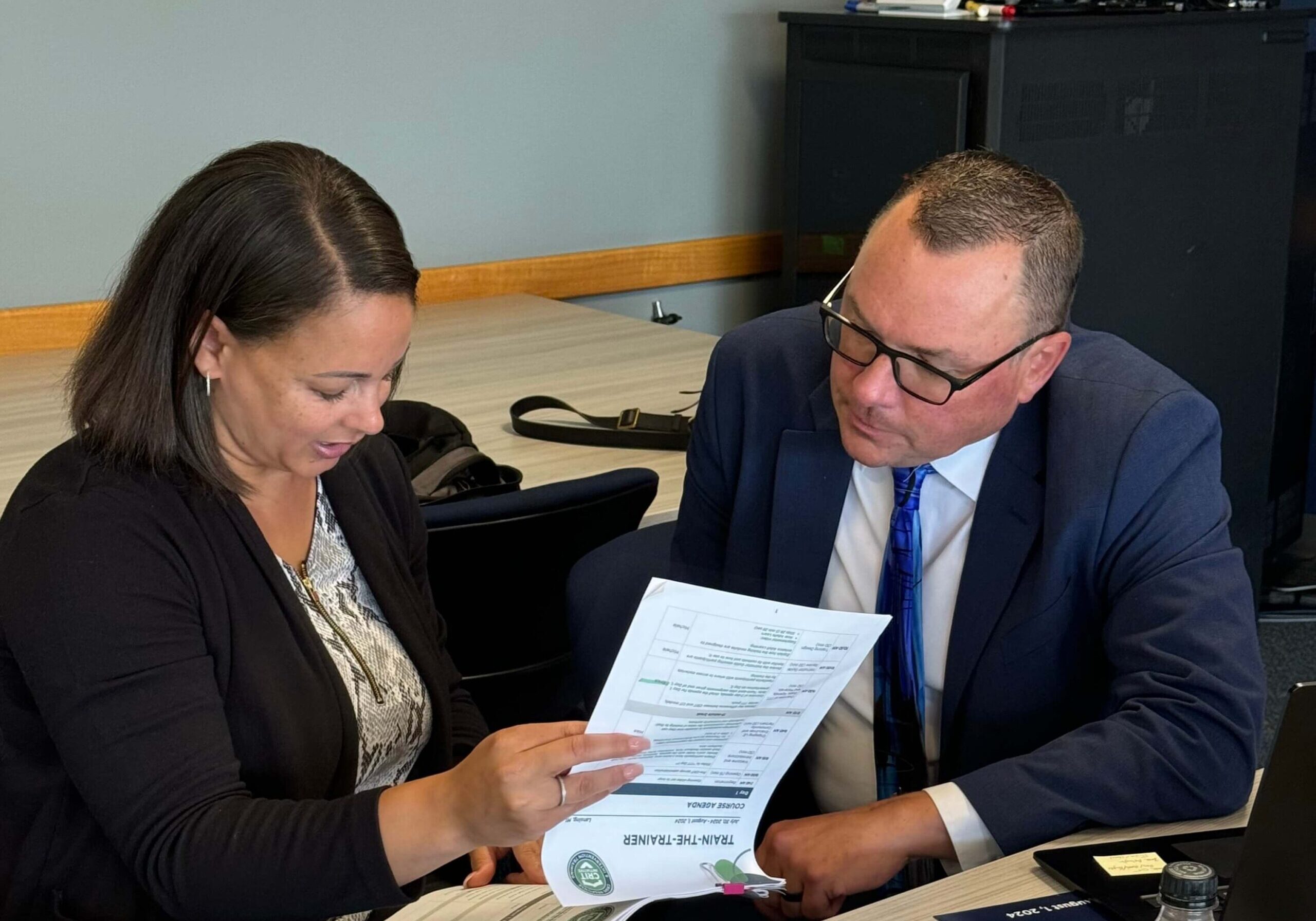
 Mike Hatch is a retired police lieutenant and seasoned law enforcement trainer with over three decades of experience. He has served as the director of a regional police academy and as director of crisis services for a non-profit organization. Mike was a key contributor to the development of the Bureau of Justice Assistance (BJA)-funded Crisis Response Intervention Training (CRIT) and played an instrumental role in delivering the program across all four pilot sites. He also co-developed and facilitated the CRIT train-the-trainer program. Currently, Mike supports de-escalation and crisis response initiatives with the National Policing Institute. He has presented nationally on CRIT and 911 diversion strategies, is a trained National Sequential Intercept Map Facilitator, and is trained to deliver SAMHSA's "How Being Trauma-Informed Improves Criminal Justice Responses" train-the-trainer program.

Amanda Shoulberg, MA
Amanda Shoulberg, MA
 Amanda Shoulberg, MA, has extensive experience supporting large-scale projects in de-escalation and crisis response, including curriculum development, resource development for practitioner audiences, and organizing and translating research to inform practice. She is a Co-Principal Investigator on the COPS Office-funded Implementation of De-escalation Training Act Program and was a Co-Principal Investigator on a BJA-funded award that provided technical assistance to BJA's Collaborative Crisis Response and Intervention Training (CRIT) Program grantees.

Brooke Marston, MS
Brooke Marston, MS
 Brooke Marston, MS, has contributed to several de-escalation training evaluation projects. This work has included attending and observing de-escalation training classes, collecting surveys, conducting interviews, and analyzing training outcomes across the country.
Let's talk about de-escalation
Connect With Us to Advance Your Agency's De-escalation Training
Our expert team is available to: