
Search Results
Refine Results

In an era of unprecedented challenges facing law enforcement agencies across the nation, strategic police staffing has emerged as a cornerstone of public safety management. Between budget constraints, evolving community expectations, and an ongoing crisis in recruitment, police departments…

The National Policing Institute team proudly presents Inside Our Impact, a newsletter dedicated to sharing NPI’s stories and those who make our work possible. Each issue highlights some of NPI’s research or projects and shares insights into how our dedication…

The big picture: Sometimes innovation can be as simple as looking at a concept from a different angle. What do artificial intelligence, roadway safety, crisis response, and evidence-based policing have in common? They’re not just top-of-mind for public safety…
The National Policing Institute Announces New Board of Directors and Chair JULY 1, 2025—Arlington, Virginia—Starting July 1, the National Policing Institute’s Board of Directors will be headed by a new chairman, Laurie O. Robinson, and vice chair and former chief…

For every police officer, there is a defining period that shapes not only their performance on the job but also their mindset, ethics, and approach to community engagement: field training. This stage, often the bridge between the academy and full-duty…

The National Policing Institute (formerly the Police Foundation) joins the nation in mourning the passing of Judge William H. Webster, who served on our Board for six years, five as Chair. Judge Webster was an extraordinary American whose career reflected…

After-action reviews (AARs) have long played an essential role in improving performance—not only in law enforcement, but also in the military, aviation, public health, and the private sector. Their value extends from analyzing large-scale incidents to refining routine daily operations.…

Stress in policing is unavoidable, but not all sources of stress are the same. While many police applicants expect dangers on the job, such as responding to violent incidents or traumatic events, what is less obvious is the stress that…


Ask any person who has successfully rolled out a new initiative or made a change in practice about how they do it, and they might relay a version of an “if you build it, they will come” mindset, where reality…
The National Policing Institute, a national, non-profit organization dedicated to advancing policing through science and innovation, has received information from several individuals who have been contacted by solicitors asking for donations in support of the “National Policing Institute,” or in…
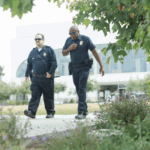
Every law enforcement officer knows that stress is part of the job. Long shifts, exposure to trauma, unpredictable hours, and the weight of public safety responsibilities create a high-pressure environment. What is less often acknowledged, however, is that unmanaged stress…
In an era of unprecedented challenges facing law enforcement agencies across the nation, strategic police staffing has emerged as a cornerstone of public safety management. Between budget constraints, evolving community expectations, and an ongoing crisis in recruitment, police departments…
The National Policing Institute team proudly presents Inside Our Impact, a newsletter dedicated to sharing NPI’s stories and those who make our work possible. Each issue highlights some of NPI’s research or projects and shares insights into how our dedication…
The big picture: Sometimes innovation can be as simple as looking at a concept from a different angle. What do artificial intelligence, roadway safety, crisis response, and evidence-based policing have in common? They’re not just top-of-mind for public safety…
The National Policing Institute Announces New Board of Directors and Chair JULY 1, 2025—Arlington, Virginia—Starting July 1, the National Policing Institute’s Board of Directors will be headed by a new chairman, Laurie O. Robinson, and vice chair and former chief…
For every police officer, there is a defining period that shapes not only their performance on the job but also their mindset, ethics, and approach to community engagement: field training. This stage, often the bridge between the academy and full-duty…
The National Policing Institute (formerly the Police Foundation) joins the nation in mourning the passing of Judge William H. Webster, who served on our Board for six years, five as Chair. Judge Webster was an extraordinary American whose career reflected…
After-action reviews (AARs) have long played an essential role in improving performance—not only in law enforcement, but also in the military, aviation, public health, and the private sector. Their value extends from analyzing large-scale incidents to refining routine daily operations.…
Stress in policing is unavoidable, but not all sources of stress are the same. While many police applicants expect dangers on the job, such as responding to violent incidents or traumatic events, what is less obvious is the stress that…
Ask any person who has successfully rolled out a new initiative or made a change in practice about how they do it, and they might relay a version of an “if you build it, they will come” mindset, where reality…
The National Policing Institute, a national, non-profit organization dedicated to advancing policing through science and innovation, has received information from several individuals who have been contacted by solicitors asking for donations in support of the “National Policing Institute,” or in…
Every law enforcement officer knows that stress is part of the job. Long shifts, exposure to trauma, unpredictable hours, and the weight of public safety responsibilities create a high-pressure environment. What is less often acknowledged, however, is that unmanaged stress…