
Search Results
Refine Results

Across the United States, law enforcement agencies are confronting a staffing challenge that feels both urgent and enduring. Vacancies remain high, experienced officers are leaving earlier than expected, and agencies are under increasing pressure to maintain public safety with fewer…

Why reducing organizational stress—and limiting its harm—takes action at every level Stress is widely recognized as inherent in law enforcement work. Traditionally, the dangers and traumatic exposures associated with policing have been viewed as the primary threats to officer health…

Law enforcement agencies across the United States are more and more involved in responding to homelessness. Calls for service involving people who are unhoused, especially those who are chronically homeless, take up a great deal of officer time and agency…
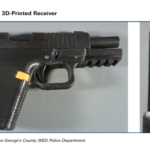
In recent years, ghost guns (also known as privately made or unserialized firearms) have become a significant concern to law enforcement and public safety. The term “ghost gun” encompasses a variety of firearms produced from components that are not currently…

Eyewitness Identification in Law Enforcement: Bridging the Gap Between Science, Policy, and Practice
Eyewitness identification remains one of the most powerful—and most scrutinized—forms of evidence in the criminal justice system. From photo arrays to live showups, identification procedures play a pivotal role in investigations, prosecutions, and court outcomes. Yet despite decades of scientific…

Exploring AI for Decision Support, Trend Detection and Analysis, Resource Allocation and Management, Across the Profession Law enforcement agencies are operating in an era of data abundance. Agencies have more information than ever, including computer-aided dispatch logs, records management data,…
Across the United States, law enforcement agencies are confronting a staffing challenge that feels both urgent and enduring. Vacancies remain high, experienced officers are leaving earlier than expected, and agencies are under increasing pressure to maintain public safety with fewer…
Why reducing organizational stress—and limiting its harm—takes action at every level Stress is widely recognized as inherent in law enforcement work. Traditionally, the dangers and traumatic exposures associated with policing have been viewed as the primary threats to officer health…
Law enforcement agencies across the United States are more and more involved in responding to homelessness. Calls for service involving people who are unhoused, especially those who are chronically homeless, take up a great deal of officer time and agency…
In recent years, ghost guns (also known as privately made or unserialized firearms) have become a significant concern to law enforcement and public safety. The term “ghost gun” encompasses a variety of firearms produced from components that are not currently…
Eyewitness Identification in Law Enforcement: Bridging the Gap Between Science, Policy, and Practice
Eyewitness identification remains one of the most powerful—and most scrutinized—forms of evidence in the criminal justice system. From photo arrays to live showups, identification procedures play a pivotal role in investigations, prosecutions, and court outcomes. Yet despite decades of scientific…
Exploring AI for Decision Support, Trend Detection and Analysis, Resource Allocation and Management, Across the Profession Law enforcement agencies are operating in an era of data abundance. Agencies have more information than ever, including computer-aided dispatch logs, records management data,…